The Robotic Hand: Bridging Digital Design and Physical Innovation Through 3D Printing
In the rapidly evolving landscape of modern manufacturing and digital art, few objects capture the imagination quite like the robotic hand. It stands as a potent symbol of technology and the future, representing the convergence of mechanical engineering, artistic expression, and accessible fabrication. For creators, educators, and tech enthusiasts, the availability of high-quality 3D STL files has democratized access to these complex structures, allowing individuals to bring sophisticated robotic aesthetics into their homes, classrooms, and studios. This shift from industrial exclusivity to consumer accessibility marks a significant milestone in the maker movement, enabling a broader audience to engage with the principles of robotics through tangible, printed models.
The Intersection of Art and Engineering
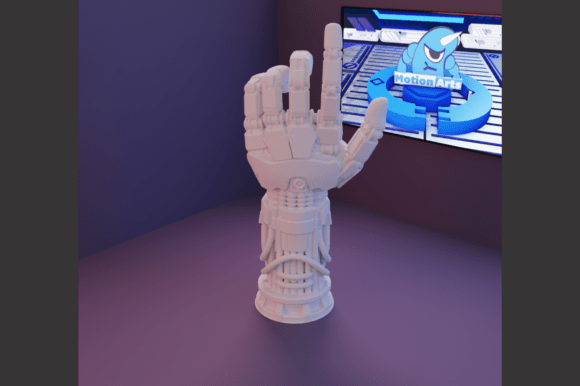
The appeal of a 3D printed robotic hand extends far beyond its mechanical function. It is primarily a piece of geek tech decor that communicates a deep appreciation for the union between art and innovation. The design often features intricate joints, exposed cabling motifs, and sleek, futuristic lines that mimic the advanced prosthetics seen in science fiction. When displayed on a desk or shelf, the model serves as a conversation starter, reflecting the owner’s interest in modernity, strength, and technological progress.
For collectors, the value lies in the exclusive and detailed design. Unlike mass-produced plastic toys, a high-fidelity STL file allows for a level of customization and finish that is unique to the printer and material used. Whether printed in matte black PLA to emphasize shadows and depth, or in metallic silk filaments to mimic chrome and steel, the final object becomes a personalized artifact. This flexibility ensures that no two prints are exactly alike, adding a layer of artistic integrity to the technological form.
Technical Considerations for 3D Printing
Creating a successful physical model from a digital file requires an understanding of the underlying technical constraints. An optimized STL file is crucial for this process. Optimization ensures that the mesh is watertight, meaning there are no holes or non-manifold edges that could confuse slicing software. For a complex assembly like a robotic hand, the file must also account for tolerances—the small gaps required between moving parts to prevent them from fusing together during printing.
When preparing to print, users must consider several factors:
- Support Structures: Overhanging fingers and intricate wrist mechanisms often require support material. Choosing the right type of support, such as tree supports, can minimize scarring on the final model and reduce post-processing time.
- Layer Height: To capture the fine details of the robotic aesthetic, a lower layer height (such as 0.1mm or 0.12mm) is recommended. This produces smoother curves on the finger joints and sharper definitions in the mechanical plating.
- Infill Density: While decorative pieces can use low infill to save material and weight, a robotic hand intended for demonstration or light handling benefits from higher infill (20-40%) to ensure structural integrity at the stress points.
The availability of a ready-to-print digital file simplifies this workflow significantly. Users can download the STL, slice it according to their specific printer capabilities, and begin production without needing to design the complex kinematics from scratch. This accessibility lowers the barrier to entry for those who wish to explore robotic forms without extensive CAD experience.
Educational Applications and STEM Learning
Beyond decoration, the robotic hand serves as a powerful tool in educational projects. In classrooms and workshops, it provides a tangible way to discuss concepts related to anatomy, mechanics, and engineering. Students can examine how the phalanges connect to the metacarpals, drawing parallels between human biology and mechanical design. This comparative approach helps demystify both biological systems and robotic engineering.
Furthermore, assembling a multi-part 3D printed hand teaches valuable skills in patience, precision, and problem-solving. If the model includes articulating joints, learners can experiment with tension, friction, and range of motion. Educators can expand on this by integrating simple electronics, such as servos or fishing line actuators, to transform the static print into a functional prototype. This progression from static model to dynamic machine illustrates the iterative nature of engineering design, encouraging students to think critically about how form follows function.
Customization and Creative Projects
One of the most compelling aspects of using a digital STL file is the potential for creative modification. Because the source file is digital, it can be altered before printing. Designers and hobbyists might scale specific components, hollow out sections for wiring, or add mounting points for cameras or sensors. This adaptability makes the robotic hand an ideal base for cosplay props, film production assets, or interactive art installations.
For content creators and streamers, a custom-painted robotic hand can serve as a unique branding element. The ability to produce multiple copies allows for consistent visual themes across videos or live streams. Additionally, the model can be adapted for stop-motion animation, where its articulated joints allow for precise posing frame by frame. This versatility ensures that the object remains relevant across various creative disciplines, not just as a static display piece but as an active component in larger projects.
The Role of AI-Generated Design
It is important to note that many modern STL files, including highly detailed robotic hands, are increasingly influenced by AI-generated 3D design techniques. Artificial intelligence can analyze thousands of existing mechanical designs to propose new, optimized structures that balance aesthetic appeal with printability. This results in organic, futuristic shapes that might be difficult to conceive through traditional manual modeling alone.
However, users should be aware of the distinction between digital perfection and physical reality. An AI-generated design may look flawless on screen, but actual printed results may vary depending on the printer’s calibration, filament quality, and environmental conditions. Understanding this disclaimer is vital for managing expectations. Post-processing, such as sanding, priming, and painting, often bridges the gap between the digital model and the desired physical finish, allowing the creator to refine the AI’s output into a polished final product.
Selecting the Right Material for Durability and Aesthetics
The choice of filament plays a critical role in the final appearance and longevity of the robotic hand. Different materials offer distinct advantages:
- PLA (Polylactic Acid): Ideal for detailed decorative pieces. It prints easily, holds fine details well, and comes in a wide variety of colors and finishes, including marble, wood, and metal effects.
- PETG (Polyethylene Terephthalate Glycol): Offers greater durability and slight flexibility, making it suitable for hands that will be handled frequently or used in functional demonstrations. It is more resistant to impact than PLA.
- ABS (Acrylonitrile Butadiene Styrene): Known for its strength and heat resistance, ABS is suitable for industrial-style displays. However, it requires a heated bed and enclosed printer to prevent warping.
- Resin (SLA/DLP Printing): For ultra-high detail, resin printing produces smooth surfaces and intricate features that FDM printers cannot match. This is perfect for small-scale collectibles or highly realistic props, though the material is more brittle.
By matching the material to the intended use case, creators can ensure their robotic hand not only looks impressive but also withstands the demands of its environment.
Conclusion: Embracing the Future of Fabrication
The robotic hand represents more than just a novelty item; it is a testament to the power of digital fabrication. By downloading a high-quality STL file, individuals participate in a global community of makers who value innovation, precision, and creativity. Whether used as a striking piece of home decor, an educational aid, or a foundation for advanced robotic experiments, this model encapsulates the spirit of the modern tech enthusiast. As 3D printing technology continues to advance, the line between digital concept and physical object will blur further, offering even more opportunities for creators to shape the future, one layer at a time.